Loading
Digifacturing · Resources
Should Manufacturers Invest in SEO or Google Ads?
Written by Tarun Gurwara, Manufacturing Consultant, Ahmedabad
Factory owners often face the same decision: put money into manufacturing SEO or start Google Ads. Both can bring B2B leads. Both appear on Google. But they work very differently, and choosing the wrong order wastes budget and delays results.
This comparison matches real manufacturing realities, helping factories make this choice based on their current situation, sales cycle, and goals.
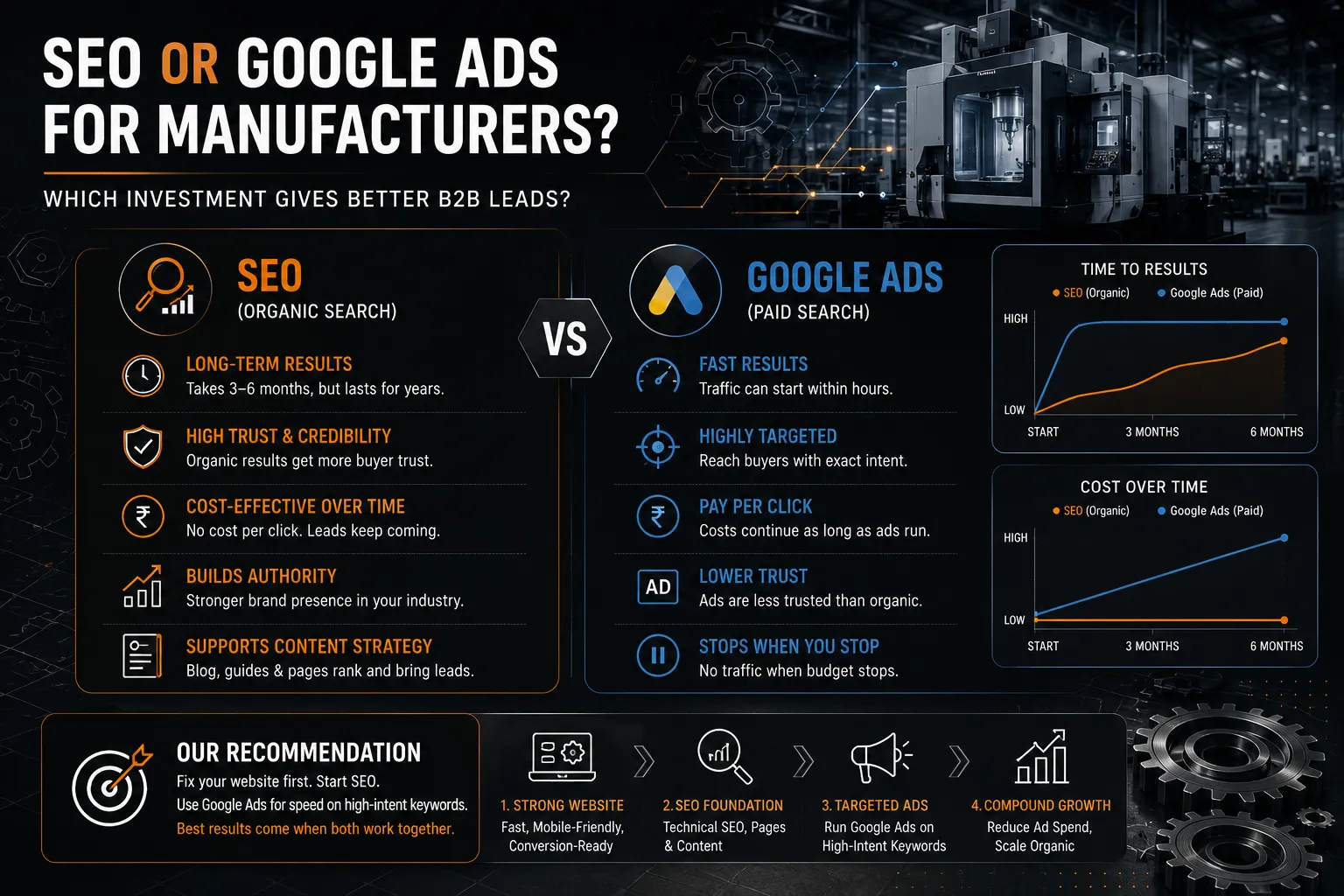
How Google Ads Works for Manufacturers
Google Ads is paid search. You choose keywords, set a budget, and pay when someone clicks your ad. Your page can appear at the top of results within hours.
Advantages- —Fast results — useful when you need enquiries this quarter
- —Precise targeting on high-intent terms such as specific processes, materials, or locations
- —Easy to test new products or services quickly
- —Can target competitor brand searches in some cases
- —Visibility stops the moment you stop paying
- —Cost per lead can rise quickly if the website does not convert well
- —Buyers often trust organic results more than ads
- —Requires constant monitoring and budget
Google Ads works best when the website is already clear, fast, and ready to turn visitors into enquiries. Without that foundation, paid traffic often produces low-quality or incomplete leads.
How Manufacturing SEO Works
Manufacturing SEO means improving the website so it ranks in the unpaid (organic) results. This includes technical fixes, clear content, and proper structure so search engines and buyers can find the right pages.
Advantages- —Leads continue without paying for every click
- —Higher trust from buyers who prefer organic listings
- —Supports longer sales cycles by educating buyers early
- —Builds a lasting asset that compounds over time
- —Improves overall factory digital marketing performance
- —Takes time — most factories see meaningful results in 3 to 6 months
- —Needs consistent work on content and technical quality
- —Results depend on the strength of the website and competition for the terms you target
SEO is slower to start but usually delivers better long-term manufacturing marketing ROI.
Direct Comparison for Manufacturing
| Factor | Google Ads | Manufacturing SEO |
|---|---|---|
| Speed of results | Hours to days | 3 to 6 months for steady leads |
| Cost structure | Pay per click, ongoing | Higher upfront, lower ongoing cost |
| Trust level | Lower (marked as ad) | Higher (organic) |
| Durability | Stops when budget stops | Continues and can grow |
| Best for | Quick pipeline fill, new launches | Sustainable visibility and authority |
| Dependence on website | High (must convert traffic) | High (must be crawlable and useful) |
When to Choose Google Ads First
- —You need leads in the next 30 to 90 days
- —You are launching a new capability or product line
- —Your website already converts visitors reasonably well
- —You have clear high-intent keywords with manageable competition
Even then, run ads only after basic website fixes are in place. Poor manufacturer website design wastes ad budget quickly.
When to Choose Manufacturing SEO First
- —You want lower cost per lead over the next 12 to 24 months
- —Your sales cycle is long and buyers research heavily
- —You are tired of depending only on trade shows and referrals
- —You want the company to appear consistently when buyers search for your processes
SEO also supports broader goals such as export visibility and long-term factory growth.
The Practical Approach Most Factories Should Use
The best results rarely come from choosing only one channel. A common effective sequence:
01
Fix the Website First
Make it clear, fast, and mobile-friendly. This improves both SEO and ad performance.
02
Start Basic Manufacturing SEO Work
Cover technical health, key pages, and content before spending on ads.
03
Run Limited, Tightly Targeted Google Ads
Target only the highest-intent terms while SEO builds in the background.
04
Shift Budget as Rankings Improve
Usually after 4 to 6 months, reduce ad spend on terms that now rank well and shift budget to new opportunities or other channels.
This order protects budget and builds a more stable B2B lead generation system.
Common Mistakes to Avoid
- —Starting heavy Google Ads on a weak website
- —Expecting SEO results in 30 days
- —Bidding on broad, expensive keywords instead of precise manufacturing terms
- —Stopping SEO work after the first few months
- —Treating both channels as separate instead of connected
These mistakes reduce manufacturing marketing ROI and create frustration.
How Digifacturing Helps with This Decision
Digifacturing focuses on the practical sequence that fits manufacturing realities. The goal is not to sell more ads or more SEO hours. The goal is a system that produces reliable industrial leads at a sustainable cost. A short review of your current website, existing traffic, and sales process usually shows clearly whether SEO, ads, or both should come first.
Talk to Tarun on WhatsApp
Get a clear recommendation based on your factory's situation with a free 30-minute Digifacturing audit.
Frequently Asked Questions
Commercial
Should manufacturers invest in SEO or Google Ads first?
Most should fix the website and start manufacturing SEO first, then add tightly targeted Google Ads for speed. The exact order depends on how urgent the need for leads is and how ready the website is.
Entity
How long does it take to see results from B2B marketing with SEO?
Meaningful organic leads usually appear in 3 to 6 months with consistent work. Full impact often takes 6 to 12 months.
Commercial
Is Google Ads worth it for manufacturing companies?
Yes, when the website converts well and keywords are precise. It is less effective as a standalone long-term strategy because costs continue and visibility stops when spending stops.
Entity
Can SEO and Google Ads work together?
Yes. Many factories use ads for immediate high-intent traffic while SEO builds lasting visibility. Over time the mix usually shifts toward more organic results.
EntityCommercial
What is the better long-term choice for manufacturing marketing ROI?
Manufacturing SEO generally delivers better long-term ROI because leads continue without ongoing click costs. Google Ads is better for short-term speed.
Choose the Right Sequence
Ready to Know Where to Invest First?
Book a free 30-minute Digifacturing audit with Tarun Gurwara and get a clear recommendation for your factory.
Ahmedabad, Gujarat, India · Digifacturing · Tarun Gurwara