Loading
Digifacturing · Manufacturing Consultant India
Manufacturing Consultant India: Digital Marketing & SEO
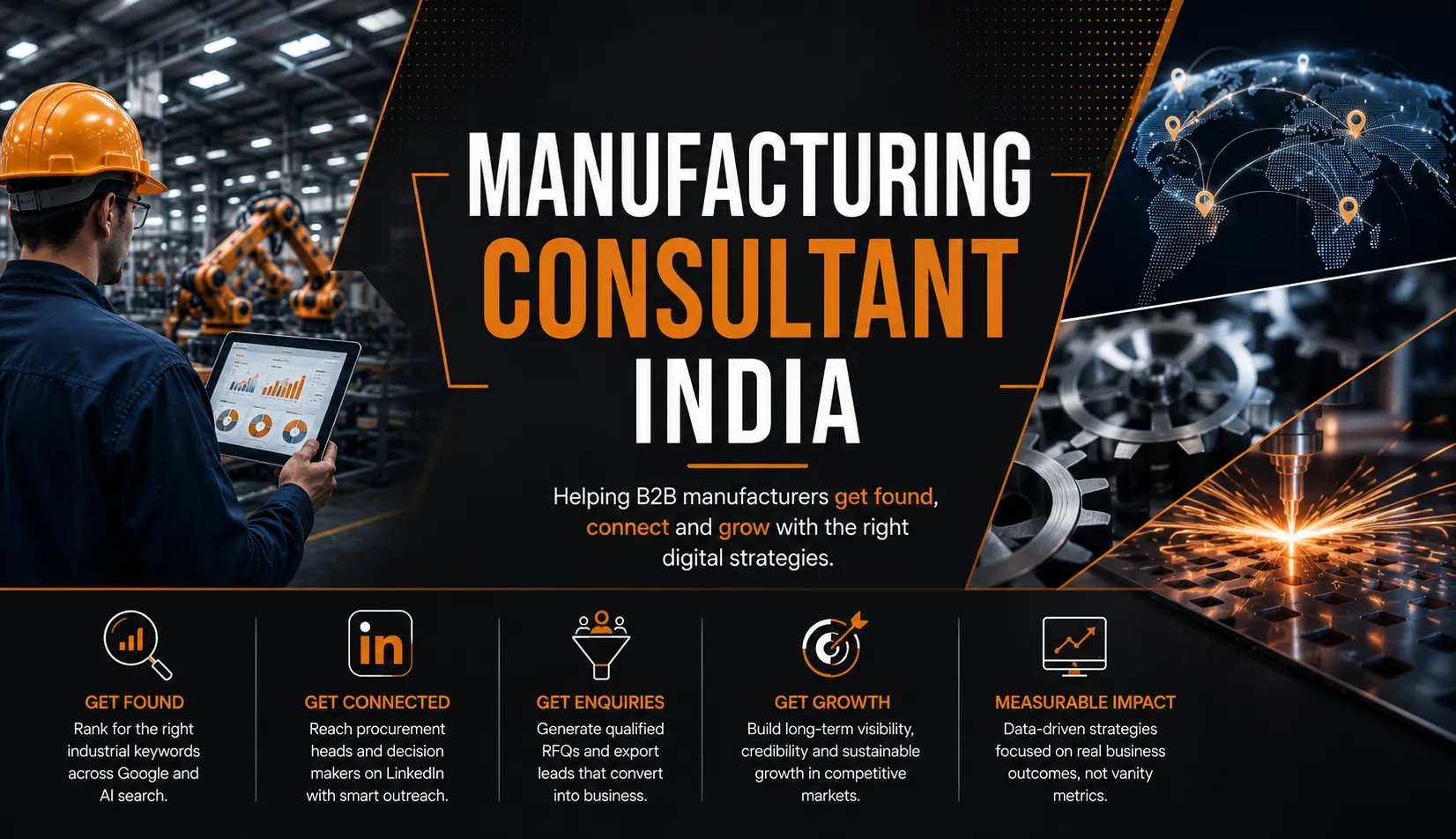
Helping B2B manufacturers grow with SEO built for industrial keywords, LinkedIn outreach aimed at procurement heads and plant managers, AI search optimization (GEO), and lead generation systems that turn website visits into RFQs and export enquiries.
Quick Answer
A manufacturing consultant in India helps B2B manufacturers get found by the right buyers online. That means SEO built for industrial keywords, LinkedIn outreach aimed at procurement heads and plant managers, AI search optimization (GEO), and lead generation systems that turn website visits into RFQs and export enquiries. The goal is a manufacturer that shows up when a buyer is researching suppliers, whether that buyer is on Google, LinkedIn, or asking ChatGPT for a shortlist.
Manufacturing Growth Needs a Different Playbook
Buyers in manufacturing don't behave like consumer shoppers. A procurement head evaluating a new supplier will check certifications, compare technical specifications across three or four vendors, ask for samples, read case studies, and often spend weeks or months going back and forth before an RFQ is even sent. That buying journey has almost nothing in common with a consumer clicking "buy now" after seeing an Instagram ad, which is exactly why marketing built for e-commerce or D2C brands falls flat when it's applied to a manufacturing business.
This consultancy exists to close that gap. The work sits at the intersection of manufacturing industry knowledge and hands-on digital execution, covering SEO strategy, digital marketing, LinkedIn outreach, website strategy, and lead generation, all built around how industrial buyers actually search, compare, and decide.
Sectors covered include pharmaceuticals and specialty chemicals, electrical equipment, industrial machinery, automation, packaging, textiles, EV components, and renewable energy manufacturing, among others. Each of these has its own buyer language and search behavior. A pharma procurement officer searching for a contract manufacturer uses different terms and cares about different certifications than a plant head sourcing industrial automation hardware, and the strategy has to reflect that rather than treating "manufacturer" as one generic audience. Explore sector-specific detail on the industries page.
How the Work Actually Runs
Most engagements start the same way: a review of where the business currently stands online, meaning current rankings, website structure, existing content, and how the company shows up (or doesn't) when a buyer searches relevant terms on Google and asks an AI tool for supplier recommendations. From there, the priorities usually fall into three buckets.
01
Visibility
Fixing the technical and content gaps that keep a manufacturer from ranking for the terms buyers actually type, and structuring the site so AI search tools can find and cite it too.
02
Outreach
Building a LinkedIn presence and outbound system that reaches procurement heads, plant managers, and technical directors directly, rather than waiting for them to stumble onto the website.
03
Conversion
Making sure that once a buyer lands on the site or responds to outreach, there's a clear next step, whether that's an audit request, a case study, or a direct enquiry form, so interest doesn't quietly disappear.
None of this is a one-time project. Manufacturing sales cycles are long, so the visibility and outreach work compounds over months, not days.
What This Consulting Covers
01
SEO for Manufacturers
Ranking for the terms buyers actually type before they contact a supplier, not just the company's own brand name. This includes technical SEO fixes like site speed, crawlability, and structured data, keyword research built around procurement and engineering search intent (think "contract manufacturer for [chemical] India" rather than generic industry terms), and content written to directly answer the questions a buyer has at each stage of their research.
02
AI Search and GEO Optimization
Tools like ChatGPT, Perplexity, and Google's AI Overviews increasingly answer buyer questions directly, sometimes before a single click happens. A buyer might ask an AI tool to "list reliable pharma contract manufacturers in Gujarat" and get a shortlist without ever opening a search results page. Getting included in that shortlist takes a different kind of content structure: a clear Quick Answer near the top of every page, FAQ schema marked up so AI tools can parse it, and pages written to resolve a question directly instead of burying the answer under marketing copy.
This is a newer discipline than traditional SEO and most manufacturing websites haven't touched it yet, which is currently an advantage for the ones that do.
03
B2B Lead Generation
Manufacturing leads look different from consumer leads, and they need to be treated differently. This covers OEM enquiries, distributor and dealer leads, export RFQs, and corporate procurement contacts, built through a combination of inbound content, outbound LinkedIn campaigns, and a website designed to capture and qualify interest rather than just list products.
04
LinkedIn Outreach
Most procurement heads, plant managers, and technical directors are active on LinkedIn, not on consumer social platforms, and they respond to specific, relevant outreach far more than generic pitches. That means connection requests referencing something real about their business, content that demonstrates genuine industry knowledge rather than stock advice, and campaigns aimed at a defined list of target companies rather than a broad spray.
05
Website Strategy
A manufacturing website needs to do more than list products and specifications. It should answer the questions a buyer has before they're ready to pick up the phone, show real evidence of capability such as certifications, plant details, and case studies, and make it obvious what to do next once a visitor is interested.
Why This Approach Is Different
Most digital agencies apply the same playbook to every client, whether that client sells industrial valves or running shoes. Manufacturing has long sales cycles, technical and risk-averse buyers, certification and compliance requirements, and often export markets with their own research behavior, none of which a generic consumer marketing playbook accounts for. The work here is built around measurable outcomes such as qualified enquiries, RFQs, and export leads, rather than traffic numbers or social media vanity metrics that don't reflect actual business impact.
Get Started
Not sure where your current website and SEO stand today? Get a free digital audit and get a clear, specific view of what's working, what's costing you enquiries, and where to focus first.
Get a Free Digital AuditNot Sure Where Your Website Stands Today?
Connect with Tarun Gurwara and book a free digital audit - a clear, specific view of what's working, what's costing you enquiries, and where to focus first.
Frequently Asked Questions
EntityCommercial
What does a manufacturing consultant in India actually do?
The work covers digital visibility, B2B lead generation, website strategy, and marketing built specifically for how manufacturing buyers research and choose suppliers, rather than generic small business marketing that's built for a completely different kind of buyer.
EntityCommercial
How does digital marketing help a manufacturing company?
It brings in qualified enquiries instead of just traffic. That means better Google rankings for the terms industrial buyers actually search, a stronger LinkedIn presence with the procurement and technical people who make sourcing decisions, and export enquiries from international buyers who are researching suppliers online before ever reaching out.
EntityGeo
Do you work with MSMEs as well as larger manufacturers?
Yes, the approach adjusts based on scale. Startups and MSMEs typically need foundational visibility and lead generation first, since many don't rank for even basic industry terms yet. Established manufacturers and exporters usually already have that foundation and need more advanced SEO, GEO, and outbound systems on top of it.
EntityGeo
Which industries does this cover?
Pharmaceuticals, specialty chemicals, electrical equipment, engineering components, packaging, EV parts, textiles, industrial automation, and renewable energy manufacturing are the core focus areas. See the industries page for sector-specific detail.
GeoCommercial
Can this help generate export enquiries specifically?
Yes, this is a core part of the work. Export-focused SEO targets the terms international buyers search, LinkedIn outreach reaches procurement teams outside India directly, and AI search optimization helps a manufacturer show up when an overseas buyer asks an AI tool for supplier recommendations, which is an increasingly common first step in international sourcing.
Entity
What is GEO and why does it matter for manufacturers?
GEO, or Generative Engine Optimization, means structuring content so AI tools like ChatGPT and Google's AI Overviews can find, understand, and cite it directly in their answers. As more buyers start their research with an AI tool instead of a traditional search, this is becoming as important as classic SEO, and most manufacturing websites haven't adapted to it yet.
EntityCommercial
Is this a full digital transformation service or just SEO?
It's broader than SEO alone. Digital marketing, lead generation, website strategy, LinkedIn outreach, and AI search visibility work together as one connected system rather than as separate, disconnected services, since a manufacturer's growth usually depends on several of these moving together.
Commercial
How long does it take to see results?
Manufacturing buying cycles are naturally long, so this isn't an overnight process. Technical SEO fixes and basic visibility improvements can show movement within a couple of months, while stronger rankings, LinkedIn-driven relationships, and a steady flow of qualified enquiries typically build over two to six months of consistent work, sometimes longer for competitive, established markets.
EntityCommercial
Do you help with the website itself, or just marketing around it?
Both. A website that isn't structured to answer buyer questions or capture enquiries will limit the results of any SEO or outreach work, so website strategy and structure are usually addressed alongside the marketing itself rather than treated as a separate project.
Start Generating Direct Leads Today
Ready to Build a Predictable Manufacturing Sales Pipeline?
Book a free 30-minute Manufacturing Growth Audit with Tarun Gurwara. Walk away with a clear picture of where your manufacturing business stands digitally - and exactly what to do next to generate more RFQs.
Ahmedabad, Gujarat, India · Digifacturing · Tarun Gurwara