Loading
Digifacturing · Resources
How to Make Your Manufacturing Website AI-Ready
Written by Tarun Gurwara, Manufacturing Consultant, Ahmedabad
Most manufacturing websites were built for people and old Google. Today buyers and AI tools both read your site. If the pages are thin, messy or hard to understand, your factory stays invisible online.
Factory owners often search for how to build a website for their manufacturing company or how to make their factory look credible online. The next step is making that website ready for AI systems that answer buyer questions and recommend suppliers. This guide gives clear, practical steps any manufacturer can follow using the Digifacturing approach.
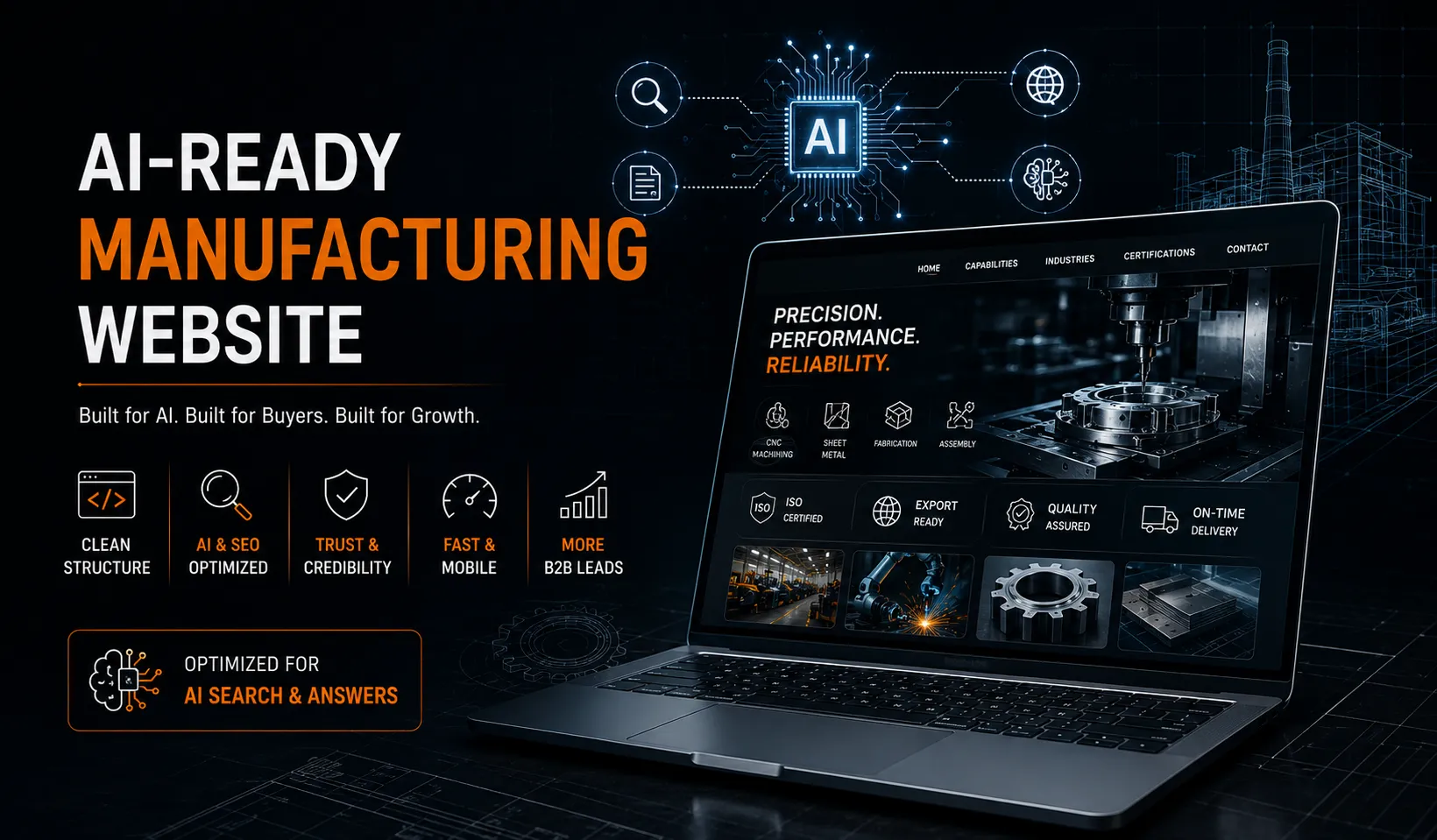
Why Your Manufacturing Website Must Work for AI Tools
AI tools and modern search engines now read websites differently. They look for clear structure, real expertise, complete information and consistent facts. A website that is not AI-ready creates these problems:
01
Absent from AI Answers
Your factory does not appear in AI answers when buyers ask for suppliers.
02
Unclear Capabilities
Google and other engines struggle to understand your capabilities from thin or messy pages.
03
Buyers Leave Quickly
Buyers leave quickly because the site feels outdated or incomplete.
04
Competitors Win the Enquiry
Competitors with clearer sites get the enquiries instead, even with weaker technical capability.
Making the site AI-ready improves manufacturing SEO, supports factory digital marketing and raises the chance that AI systems recommend your company for the right searches.
Core Steps to Make a Manufacturing Website AI-Ready
01
Build Clear Structure and Simple Language
AI tools prefer pages that are easy to scan and understand. Use one clear H1 that matches the page topic, break content into short sections with proper H2 and H3 headings, write in plain language a plant manager or procurement person can read quickly, and avoid long blocks of text and marketing fluff. Every important page should answer a real buyer question about process capability, materials handled, certifications, lead times, and industries served.
02
Show Real Factory Proof Everywhere
AI systems and buyers both look for evidence that you actually do the work. Add clear photos and short videos of the plant and quality checks, specific process descriptions instead of vague claims, certifications with certificate numbers, case examples of completed jobs, and an easy-to-read machine list or capability matrix.
03
Strengthen Manufacturer Website Design for Speed and Mobile
A slow or broken mobile site fails both users and AI crawlers. Fix fast loading on mobile and desktop, easy phone navigation, clear contact buttons and WhatsApp links on every page, forms that actually send enquiries to the right person, and remove broken links or missing images.
04
Add Technical Signals That Help AI and Search Engines
Clean URL structure with relevant words, proper title tags and meta descriptions on every page, schema markup for organization, products or services, an XML sitemap submitted to search engines, secure HTTPS, and consistent company name, address, and contact details across the site all help machines understand your factory correctly.
05
Create Content That Answers Buyer and AI Questions
Thin pages with only a few sentences do not help. Plan content around real searches such as how to get more B2B leads, process or material specific terms, export readiness, and capability comparisons. Write pages that fully answer the question, using lists, tables, and short paragraphs, and link related pages together.
06
Keep Information Fresh and Consistent
Outdated details hurt credibility. Regularly review your machine list and capacity updates, new certifications, recent projects or process improvements, and contact information. Consistent, up-to-date information helps AI tools trust your site more than sites that look abandoned.
How an AI-Ready Website Supports Overall Factory Growth
An AI-ready manufacturing website does more than look modern. It becomes the central asset for:
- —Organic B2B lead generation
- —LinkedIn traffic conversion
- —Google Ads performance
- —Export buyer trust
- —Long-term manufacturing marketing ROI
When the website works well, every other digital effort produces better results. This is a core part of the Digifacturing method used to help manufacturers grow digitally.
Common Mistakes That Keep Manufacturing Websites Invisible
- —Copying competitor text without real detail
- —Using only product photos with no process explanation
- —Ignoring mobile users
- —Leaving old contact numbers or broken forms
- —Creating pages that say nothing specific about capability
These issues keep the company invisible online even when the plant has strong technical ability.
Practical Checklist to Start Today
- —Check mobile speed and fix major problems
- —Rewrite the homepage and main capability pages with clear headings and proof
- —Add or update plant photos and process descriptions
- —Make sure every page has a working contact method
- —Review title tags and meta descriptions
- —Plan 4 to 6 new content pages that answer real buyer questions
These steps move a typical manufacturing website toward AI readiness without needing a full rebuild in most cases.
Talk to Tarun on WhatsApp
Get a clear review of your current website and a practical plan to make it AI-ready with a free 30-minute Digifacturing audit.
Frequently Asked Questions
Entity
What does it mean for a manufacturing website to be AI-ready?
It means the site is structured, clear and complete enough that AI tools can accurately understand and recommend your factory for relevant buyer questions. It also works well for regular search engines and human visitors.
Commercial
How long does it take to make a manufacturing website AI-ready?
Basic improvements can be done in a few weeks. Full content and technical upgrades usually take 1 to 3 months depending on the starting point.
Commercial
Do I need a new website or can I improve the existing one?
Most factories can improve the current site. A full rebuild is needed only when the design is very old or the technical foundation is weak.
EntityCommercial
How does an AI-ready website help generate industrial leads?
It improves visibility in search and AI answers, builds buyer trust faster, and converts more visitors into enquiries. This supports overall B2B lead generation for manufacturers.
Entity
Is this part of Digifacturing?
Yes. Making the website AI-ready is a practical foundation step inside the Digifacturing approach for manufacturing digital transformation and growth.
Get AI-Ready
Ready to Make Your Website Impossible to Miss?
Book a free 30-minute Digifacturing audit with Tarun Gurwara and get a practical plan to make your site AI-ready.
Ahmedabad, Gujarat, India · Digifacturing · Tarun Gurwara