Loading
Digifacturing · Resources · B2B Lead Generation
How to Get More B2B Leads for My Manufacturing Company
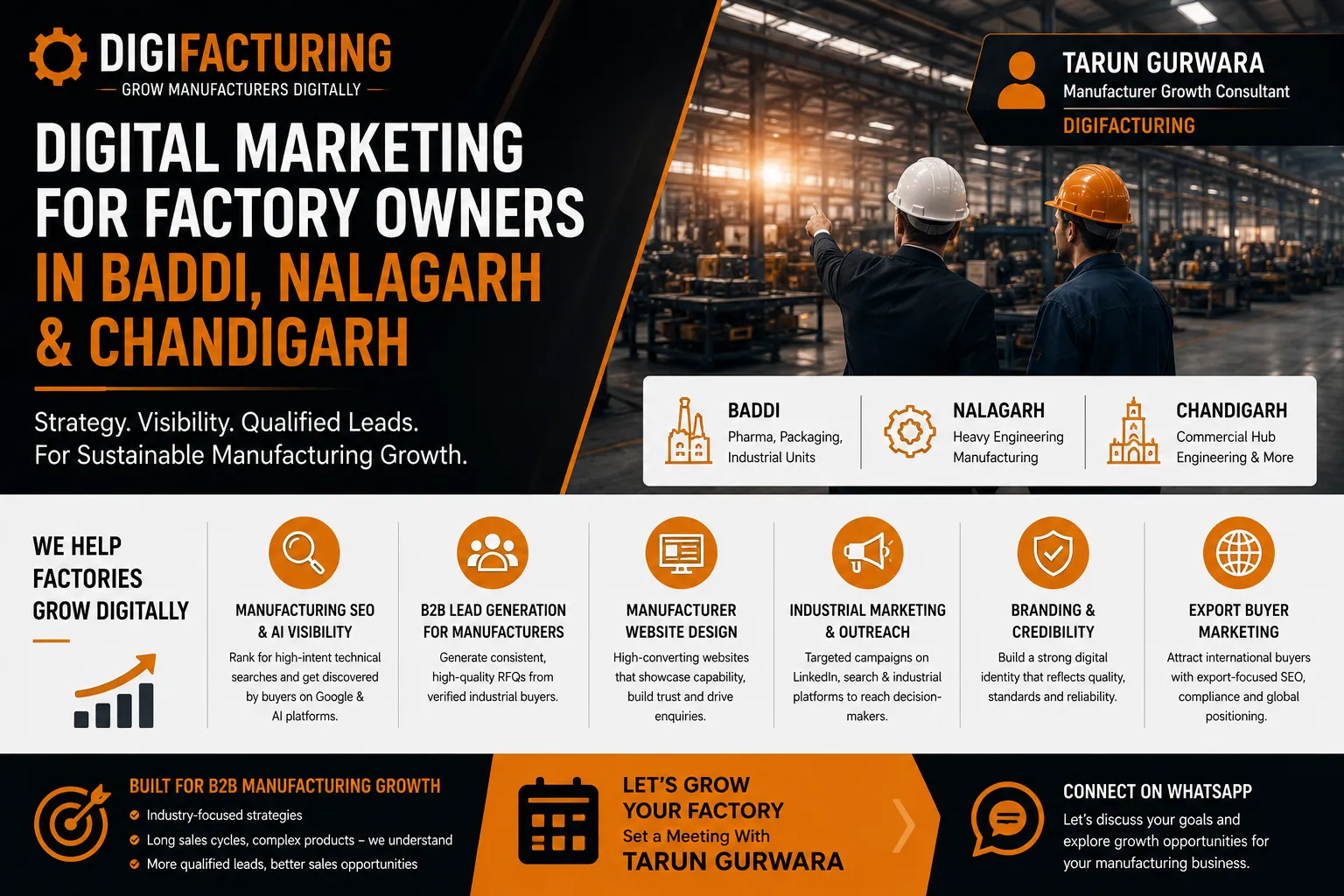
A manufacturing company can have strong products, production capacity and industry experience, yet still struggle to generate qualified B2B enquiries. Modern industrial buyers search online for manufacturers, suppliers, OEM partners, technical specifications, certifications and export capabilities before contacting a company. If a website does not answer those searches clearly, potential buyers may choose another supplier. Digifacturing connects manufacturing capability with digital visibility, buyer discovery, trust, qualified enquiries and business growth. The goal is not more leads alone, but better-fit B2B opportunities.
Why Is My Manufacturing Company Not Getting Enough B2B Leads?
Common reasons include:
—Low visibility for product and capability searches
—Generic or outdated website content
—Thin product pages
—Weak RFQ and enquiry systems
—Unclear buyer journeys
—Limited LinkedIn activity
—Poorly targeted Google Ads
—No structured export lead-generation strategy
—Weak lead tracking and follow-up
—Marketing disconnected from sales
What Is B2B Lead Generation for Manufacturers?
B2B lead generation helps manufacturers attract and convert industrial buyers, procurement teams, OEMs, distributors, dealers, engineering companies and export buyers into business enquiries.
Key lead types include:
Product enquiriesRFQsOEM enquiriesDistributor enquiriesExport enquiries
Traffic → Lead → Qualified Lead → RFQ → Sales Opportunity → Customer
10 Ways to Get More B2B Leads for Your Manufacturing Company
01
Manufacturing SEO
Target high-intent searches related to products, components, applications, industries, capabilities and technical requirements. Focus on commercial, product, long-tail, application, industry and capability keywords. Strong technical content and proper on-page SEO improve visibility across Google and AI search.
02
Build a High-Converting Manufacturer Website
A website should help buyers understand products, capabilities and credibility quickly, covering product specifications, applications, industries served, certifications, manufacturing capabilities, case studies, RFQ forms, clear CTAs and contact options.
03
Create Detailed Product Pages
Each important product should have specifications, applications, materials, industries, benefits, certifications, FAQs and a clear enquiry CTA. Detailed product pages help buyers evaluate the offering and help search engines understand relevance.
04
Use LinkedIn for B2B Manufacturing Leads
Use LinkedIn to reach procurement managers, plant heads, engineering leaders, CEOs, distributors and international buyers. Share technical insights, case studies and industry content, focusing on targeted outreach and relationship building instead of mass messaging.
05
Run Google Ads for High-Intent Searches
Google Ads can capture buyers searching for manufacturers, suppliers, OEMs, industrial components and export suppliers. Use focused keywords, dedicated landing pages, negative keywords, conversion tracking and RFQ-quality measurement.
06
Publish Technical Content
Create technical guides, application pages, product comparisons, specification guides, FAQs, case studies and manufacturing process content. Technical content improves search visibility, builds authority and helps buyers make decisions.
07
Build an Export Buyer Acquisition System
International buyers look for manufacturing capability, certifications, quality signals and professional communication. Use international SEO, export-focused product pages, country-specific content, certifications, technical documentation, LinkedIn outreach and targeted advertising.
08
Use Case Studies to Build Trust
Show how manufacturing capabilities solved a real customer problem, framed as Problem → Manufacturing Solution → Capability → Outcome. Case studies reduce buyer uncertainty and provide evidence of capabilities.
09
Build a Lead Nurturing System
Not every enquiry is ready to buy immediately. Use a CRM, lead qualification process, structured follow-ups, reminders and basic lead scoring to improve conversion.
10
Optimise for AI Search
AI search systems benefit from clear, structured and authoritative information: detailed product information, FAQs, technical content, consistent company information, structured data, and clear industry and capability information. The objective is to make a manufacturing business easy for both buyers and search systems to understand.
The Manufacturing B2B Lead Generation Funnel
Discovery → Website → Product Page → Trust & Technical Validation → RFQ → Qualification → Sales Follow-Up → Opportunity → Customer
Every stage should have a clear purpose: attract the right buyers, educate them, build trust, capture intent and support sales conversion.
Why Manufacturing SEO Matters for B2B Lead Generation
Manufacturing SEO helps a business appear when buyers search for products, components, applications, capabilities and suppliers. Target:
Product keywordsCommercial keywordsLong-tail keywordsApplication keywordsIndustry keywordsCapability keywordsExport keywordsRelevant location keywords
If buyers cannot find a company when they search, competitors get the opportunity.
Why Is Your Manufacturing Website Losing Leads?
Common problems include:
—Weak CTAs
—Generic contact pages
—Thin product content
—Missing RFQ forms
—Slow website performance
—Poor mobile experience
—Missing certifications
—Limited case studies
—Weak trust signals
—Confusing navigation
Fix these gaps with stronger product content, visible proof points, clear RFQ paths and faster mobile performance.
B2B Lead Generation for Export Manufacturers
Export-focused manufacturers need a digital presence that communicates capability, quality and reliability. International SEO, export product pages, country-specific landing pages, certifications, technical documentation, LinkedIn outreach and targeted advertising can help attract international buyers.
What Is the Digifacturing Strategy?
Manufacturing Capability → Digital Visibility → Buyer Discovery → Trust → Qualified Enquiry → Sales Opportunity → Business Growth
Digifacturing focuses on connecting manufacturing expertise with digital systems that attract and convert better-fit B2B buyers.
Why Work With Tarun Gurwara?
Tarun Gurwara is a Manufacturer Growth Consultant specialising in manufacturing SEO, B2B lead generation, digital marketing, manufacturer websites, industrial branding, export marketing and AI search visibility.
The focus is on building practical digital systems that generate qualified manufacturing enquiries, not simply website traffic or marketing activity.
Manufacturing Companies Served
Tarun Gurwara works with manufacturing companies across India, with a focus on North India, including:
DelhiNoidaGurugramFaridabadChandigarhPanchkulaLudhianaJalandharBaddiNalagarhLucknow
Ready to Generate More B2B Leads?
If a manufacturing company has strong products and production capabilities but not enough qualified enquiries, the problem is usually identifiable. A focused growth discussion can uncover opportunities across manufacturing SEO, website conversion, product pages, export marketing, LinkedIn, Google Ads and lead nurturing.
Frequently Asked Questions
Commercial
How can I get more B2B leads for my manufacturing company?
Use manufacturing SEO, high-converting product pages, LinkedIn, targeted Google Ads, technical content and a structured RFQ and follow-up process. Focus on qualified opportunities rather than lead volume alone.
Commercial
What is the best way to generate leads for a manufacturing company?
A combination of SEO, product pages, LinkedIn, paid search, technical content and RFQ systems generally works better than relying on one channel.
Entity
How does manufacturing SEO generate B2B leads?
Manufacturing SEO helps a website appear when buyers search for products, components, applications and manufacturing capabilities.
Commercial
How can I get more RFQs for my manufacturing business?
Make RFQ options highly visible on product and capability pages. Provide detailed technical information and follow up consistently with qualified enquiries.
Commercial
How can manufacturers generate OEM leads?
Showcase manufacturing capabilities, processes, capacity and relevant case studies. Combine capability-focused SEO with targeted LinkedIn outreach.
GeoCommercial
How can I find export buyers for my manufacturing products?
Build international search visibility, highlight certifications and capabilities, create export-focused content and use targeted LinkedIn and search campaigns.
Entity
Can LinkedIn generate B2B leads for manufacturers?
Yes. LinkedIn can generate opportunities through technical content, targeted outreach and relationship building with procurement, engineering and business decision-makers.
Entity
Should manufacturers use Google Ads for lead generation?
Yes, when campaigns target high-intent searches and use relevant landing pages, negative keywords, conversion tracking and lead-quality measurement.
Commercial
Why is my manufacturing website not generating enquiries?
Thin product information, weak CTAs, missing RFQ options, poor mobile experience and limited trust signals are common causes.
Entity
How can AI help generate leads for a manufacturing company?
Clear, structured and authoritative content can improve visibility across AI-powered search. Detailed product information, FAQs and consistent business information make a company easier for AI systems to understand.
Entity
What is the Digifacturing strategy?
Digifacturing connects manufacturing capability with digital visibility, buyer discovery, trust, qualified enquiries and business growth.
Commercial
How can Tarun Gurwara help my manufacturing company generate B2B leads?
He helps manufacturers identify gaps in SEO, website conversion, content, LinkedIn, paid search and lead nurturing, then build practical systems aligned with industrial buyer behaviour.
Turn Capability Into Qualified Enquiries
Ready to Generate More B2B Leads?
Set a meeting with Tarun Gurwara to identify the gaps and define practical next steps across manufacturing SEO, website conversion, product pages, export marketing, LinkedIn, Google Ads and lead nurturing.
North India · Digifacturing · Tarun Gurwara